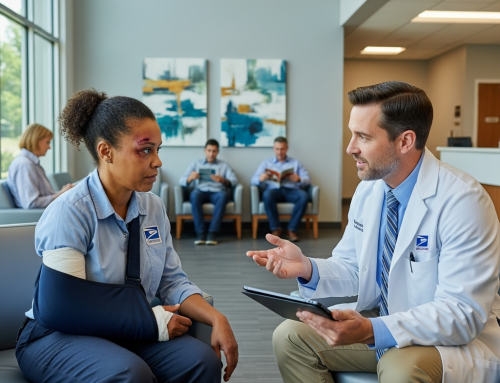
Brevard County DOL Doctors: What to Expect at Your Appointment

You know that knot in your stomach when you’re sitting in a waiting room, clutching paperwork you’re not even sure you filled out correctly? The receptionist called your name twenty minutes ago, but here you are – still waiting, still wondering what exactly is about to happen behind that door.
If you’re dealing with a work injury in Brevard County, that nervous energy probably feels all too familiar. Maybe you hurt your back lifting something at the warehouse, or developed carpal tunnel from years at a computer, or took a nasty spill on a wet floor at work. Whatever brought you here, you’re now navigating the maze of workers’ compensation… and that means you’ll be seeing a DOL doctor.
Here’s the thing – and I wish someone had told me this years ago when I was helping my own family through a similar situation – most people have absolutely no idea what to expect at these appointments. They show up confused, unprepared, and honestly? A little scared. Because let’s face it, when your livelihood depends on a medical evaluation, the stakes feel pretty high.
The doctor of legal medicine (DOL) appointment isn’t like your regular check-up with your family physician. This isn’t about chatting with Dr. Henderson who’s known you since you were twelve and asks about your kids. This is… different. More formal. More focused. And if you don’t know what’s coming, it can feel intimidating as hell.
But here’s what I’ve learned after years of working with people going through this exact process: knowledge really is power. When you know what to expect – what questions they’ll ask, how long it typically takes, what they’re actually looking for – that knot in your stomach starts to loosen. You walk in prepared instead of panicked.
See, DOL doctors in Brevard County follow pretty specific protocols. They’re not just winging it or making things up as they go along. There’s actually a method to what might seem like madness, and understanding that method can make all the difference in how your appointment goes.
Think of it like this – remember the first time you had to give a presentation at work? Terrifying, right? But once you understood the format, knew your audience, and practiced your talking points… it became manageable. Sometimes even routine. That’s exactly what we’re going for here.
Your DOL appointment is basically a fact-finding mission. The doctor needs to understand your injury, how it happened, how it’s affecting your daily life, and what your prognosis looks like. They’re not trying to trip you up or catch you in some kind of lie – though I know it can feel that way sometimes. They’re gathering information to write a report that will impact your workers’ comp claim.
And that’s where things get interesting, because the questions they ask might surprise you. They’ll want to know about your work history, sure, but also your hobbies, your sleep patterns, even how you manage household chores these days. It’s not small talk – they’re building a complete picture of how your injury has affected your life.
The physical examination part? That’s usually pretty straightforward, though it might feel more thorough than what you’re used to. They’ll test your range of motion, check your reflexes, maybe ask you to walk or lift certain things. Again, they’re not trying to make you fail – they’re documenting your current physical capabilities.
What really matters is that you go in there prepared to tell your story clearly and completely. Because that’s what this is, really – your story. How the injury happened, what you’ve been dealing with since, how it’s changed your day-to-day life. The more honest and detailed you can be, the better.
I’m going to walk you through everything you need to know to make your DOL appointment in Brevard County as smooth as possible. We’ll cover what documents to bring (spoiler alert: bring more than you think you need), what questions to expect, how to prepare mentally and physically, and what happens after you leave the office.
Because you deserve to walk into that appointment feeling confident instead of confused. Ready instead of rattled. And most importantly, prepared to advocate for yourself in a system that can feel pretty overwhelming…
What Exactly is a DOL Doctor Anyway?
So you’ve heard the term “DOL doctor” thrown around, and honestly? It’s not exactly the most self-explanatory phrase in the world. DOL stands for Department of Labor – but here’s where it gets a bit… well, bureaucratic.
When you’re injured at work in Florida, you can’t just waltz into any doctor’s office and expect your workers’ comp to pick up the tab. Your employer (or more accurately, their insurance company) gets to choose from an approved list of physicians. These are your DOL doctors – medical professionals who’ve jumped through the regulatory hoops to treat workers’ comp patients.
Think of it like this: it’s similar to being on a health insurance plan where you have to stay “in network.” Except instead of your regular health insurance calling the shots, it’s the workers’ compensation system pulling the strings.
The Workers’ Comp Medical Web
Here’s where things get a little… interesting. And by interesting, I mean potentially frustrating if you’re not prepared for it.
Your employer is supposed to provide you with a list of at least three DOL-approved doctors when you report a workplace injury. Sounds straightforward, right? Well, sometimes it is. Sometimes you get a nice, neat list with names, addresses, and phone numbers. Other times? You might get a crumpled piece of paper with barely legible scrawls that look like they were written during an earthquake.
The key thing to understand is that you have the right to choose from that list. Your boss can’t just point to one name and say “that’s your guy.” You get to pick – though admittedly, your options are limited to whatever names are on that paper.
And here’s something that trips people up: if you go to a doctor who isn’t on the approved list, you might end up paying out of pocket. Even if it’s an emergency. Even if the non-approved doctor is literally across the street from your workplace. The workers’ comp system doesn’t mess around with these rules.
What Makes These Doctors Different?
You might be wondering – are DOL doctors somehow different from regular doctors? Do they go to different medical schools? Have special training in spotting workplace injury fakers?
The short answer is… not really. Most DOL doctors are regular physicians who’ve decided to work within the workers’ compensation system. They might be family doctors, orthopedists, pain specialists, or any number of medical professionals. What makes them “DOL doctors” isn’t their medical training – it’s their willingness to navigate the paperwork maze that comes with workers’ comp cases.
And let’s be honest about that paperwork maze – it’s substantial. These doctors deal with insurance adjusters, fill out specific forms, follow particular protocols for treatment authorization, and generally spend way more time on administrative tasks than they probably signed up for in medical school.
The Authorization Dance
This is where things can get… well, let’s call it “administratively complex.” Your DOL doctor can’t just prescribe whatever treatment they think you need and call it a day. Almost everything has to be authorized by the insurance company first.
Need an MRI? Authorization required. Physical therapy? Better get approval. Prescription medication? You guessed it – more paperwork.
It’s like your doctor has to ask permission from the insurance company before treating you. Which, honestly, can be as frustrating for them as it is for you. Imagine being a medical professional and having to justify every treatment decision to someone who’s never examined the patient.
The Reality Check You Need
Here’s something that might surprise you: being a DOL doctor isn’t exactly the most lucrative gig in medicine. The reimbursement rates from workers’ comp insurance are typically lower than what doctors get from regular health insurance or cash-paying patients.
So why do doctors participate in the DOL system? Some genuinely want to help injured workers. Others see it as a steady stream of patients. And some… well, some might not be the cream of the medical crop, if we’re being completely honest.
This doesn’t mean all DOL doctors are subpar – many are excellent physicians who really care about getting you back on your feet. But it does mean you should approach your appointment with realistic expectations and a good dose of self-advocacy.
The bottom line? Understanding how this system works before you walk into that appointment can save you a lot of confusion, frustration, and potentially even money down the road.
Before You Walk Through Those Doors
You know that feeling when you’re about to meet someone important and you want to make a good impression? That’s totally normal before seeing a DOL doctor. Here’s the thing though – preparation isn’t about impressing them, it’s about getting the most out of your appointment.
Gather every piece of paperwork related to your injury. I’m talking about everything – incident reports, previous medical records, even those photos you took of your swollen ankle three weeks ago. DOL doctors need the full picture, and missing pieces can delay your case. Actually, that reminds me… make copies of everything before you go. Trust me on this one.
Call ahead and ask exactly what to bring. Some offices want original documents, others prefer copies. Getting this wrong means either risking your originals or having to reschedule because you brought the wrong format.
The Art of Describing Your Pain
This might sound obvious, but describing pain is harder than you think. “It hurts” doesn’t give the doctor much to work with – and remember, their evaluation directly impacts your benefits.
Be specific about timing. Does it hurt more in the morning when you first get up? After sitting for an hour? When the weather changes? These details matter more than you’d realize. Pain that follows patterns tells a story about your injury that generic descriptions miss.
Use the 1-10 scale, but be honest. Don’t downplay a 7 because you think you should tough it out, and don’t inflate a 4 to a 9 because you’re worried they won’t take you seriously. Most importantly – explain how the pain affects your daily life. Can you still grocery shop? Drive? Sleep through the night?
What They’re Really Looking For
DOL doctors aren’t just checking boxes – they’re building a medical case. They need to determine if your injury is work-related, how severe it is, and what treatment you need. Understanding their perspective helps you provide better information.
They’ll test your range of motion, strength, and reflexes. Some of these tests might be uncomfortable… that’s kind of the point. Don’t try to power through if something genuinely hurts – but also don’t exaggerate. They’re trained to spot both.
Here’s something most people don’t realize: these doctors are also watching how you move when you think they’re not looking. How you sit in the waiting room, how you walk to the exam table, whether you favor one side. It’s not that they’re trying to catch you in a lie – they’re gathering information about your functional capacity.
Questions You Should Actually Ask
Skip the generic “How long until I’m better?” – nobody can predict that accurately. Instead, ask questions that help you plan your next steps.
“What specific work restrictions do you recommend?” This affects whether you can return to your job or need accommodations. “Do you think I’ll need additional treatment beyond what’s been ordered?” This helps you understand if you’re looking at physical therapy, injections, or possibly surgery down the line.
And here’s a big one: “Will you be writing a report, and when should I expect it?” DOL cases can drag on forever, and knowing when documentation will be ready helps you follow up appropriately.
The Follow-Up Game Plan
Don’t just walk out and wait for someone to call you. Before you leave, understand exactly what happens next. Will they send their report directly to the insurance company? Do you get a copy? How long should you wait before checking in?
Get business cards and direct phone numbers. When you have questions later – and you will – you’ll want to talk to someone who actually knows your case, not just whoever answers the main line.
Keep your own notes about the appointment. What did they find? What did they recommend? Memory gets fuzzy, especially when you’re dealing with pain and stress. These notes become incredibly valuable if there are any disputes about what was said or recommended.
The whole process can feel overwhelming, but remember – this doctor’s job is to help determine what care you need. Being prepared, honest, and informed gives you the best shot at getting the treatment and benefits you deserve. You’ve got this.
When the Scale Doesn’t Budge (Even Though You’re Doing Everything Right)
You’ve been following your plan for three weeks. You’ve said no to birthday cake at the office, you’re drinking enough water to float a small boat, and you’ve been religious about taking your medication. So why is the scale… stuck?
Here’s the thing your DOL doctor wants you to know – weight loss isn’t linear. Your body is basically a complicated chemistry set, not a simple math equation. Some weeks you’ll drop three pounds, others you might gain one despite doing everything perfectly. It’s maddening, honestly.
The solution isn’t to panic or double down on restrictions. Instead, track other victories. Are your clothes fitting differently? Do you have more energy around 3 PM? Is your sleep better? Your Brevard County DOL doctor will help you identify these non-scale victories during your appointments – they’re often more meaningful than the number on that temperamental piece of equipment in your bathroom.
The Medication Side Effects Nobody Warns You About
Sure, your doctor mentioned nausea might happen with GLP-1 medications. But did anyone prepare you for the weird dreams? The fact that your favorite restaurant suddenly smells… off? Or that you might feel genuinely anxious about food for the first time in your life?
These side effects can feel isolating, especially when you’re scrolling through success stories online where everyone seems to be sailing through their medication journey without a hiccup.
Here’s what actually helps: keep a simple daily log. Not just what you eat, but how you feel. “Day 12: Ozempic made me feel queasy after lunch, but I noticed I wasn’t thinking about snacks all afternoon.” Your DOL doctor can adjust dosages or timing based on these real-world patterns – but they need the honest details to help you.
And remember… most side effects do settle down. Your body is learning a new normal, and that takes time.
When Your Support System Doesn’t Actually Support
This one’s tough to talk about, but it’s incredibly common. You start losing weight, and suddenly the people closest to you begin making comments. “You’re getting too thin.” “Don’t become obsessive.” “Just eat the pizza – one slice won’t hurt.”
Sometimes it’s well-meaning concern. Other times? It’s their own discomfort with change reflected back at you. Either way, it can derail your progress faster than a sleeve of Girl Scout cookies.
Your DOL doctor has seen this countless times. They might suggest phrases like, “I’m working with my doctor on this” or “I appreciate your concern, but I’m feeling great.” You don’t owe anyone a detailed explanation of your medical decisions – not even family.
Consider finding your tribe elsewhere too. Online communities specifically for medical weight loss patients understand the unique challenges you’re facing. They get why you’re excited about losing two pounds, and they won’t roll their eyes when you mention your medication.
The Insurance Maze (Because Someone Has to Say It)
Let’s be real – dealing with insurance for weight loss medications can feel like trying to solve a Rubik’s cube blindfolded. Prior authorizations, step therapy requirements, coverage denials… it’s enough to make you want to give up before you start.
Your Brevard County DOL clinic likely has staff who specialize in insurance navigation – use them. They know which documentation insurance companies want, how to appeal denials, and which alternative medications might be covered if your first choice isn’t.
Pro tip: when you call your insurance company, get names and reference numbers for every conversation. Keep a simple log. It sounds tedious, but it’ll save you hours of frustration later.
The Plateau Panic
Month three hits, and suddenly… nothing. The weight loss stops. Your brain immediately goes to worst-case scenarios: “The medication stopped working.” “I’ve ruined my metabolism.” “I’m doomed to regain everything.”
Take a breath. Plateaus are normal – your body is recalibrating. Your DOL doctor might adjust your medication, suggest tweaking your eating pattern, or simply reassure you that this pause is temporary.
This is when having regular check-ins becomes crucial. Your doctor can review your progress holistically and make evidence-based adjustments rather than letting you spiral into self-doubt.
The key? Don’t go rogue during a plateau. That’s when people typically either give up entirely or try extreme measures that backfire. Trust the process, communicate with your medical team, and remember that sustainable weight loss is rarely a straight line down.
Setting Realistic Timeline Expectations
Here’s the thing about weight loss – and I wish more people understood this upfront – it’s not like flipping a switch. You’re not going to walk out of your first DOL appointment and drop 20 pounds by next Tuesday. I know that sounds obvious, but you’d be surprised how many patients come in with those Hollywood transformation timelines dancing in their heads.
Most DOL doctors in Brevard County will tell you to expect gradual, sustainable progress. We’re talking about 1-2 pounds per week once you hit your stride, and honestly? Some weeks you might not lose anything at all. That’s completely normal, even when you’re doing everything right. Your body isn’t a math equation – it’s more like… well, imagine trying to negotiate with a stubborn teenager. Sometimes it cooperates, sometimes it doesn’t.
The first month is usually about adjustment. Your body’s figuring out what’s happening, your medication (if prescribed) is finding its rhythm, and you’re learning new habits. Don’t expect fireworks during this period. Think of it as laying the foundation for a house – not particularly exciting, but absolutely essential.
What Happens After Your Initial Visit
Once you’ve had that first comprehensive appointment, your DOL doctor will typically want to see you again within 2-4 weeks. This isn’t because they’re trying to rack up appointment fees (though I get why it might feel that way). They genuinely need to monitor how you’re responding to any medications and adjust your plan based on real-world results.
These follow-up visits are usually shorter – maybe 15-20 minutes instead of that hour-long deep dive from your first appointment. You’ll step on the scale (yes, I know, nobody’s favorite part), discuss how you’re feeling, and troubleshoot any challenges that have popped up.
And trust me, challenges will pop up. Maybe the medication is making you feel queasy, or you’re struggling with cravings at 3 PM every day, or your workout routine isn’t clicking. This is all valuable information – not signs of failure.
The Reality of Medication Adjustments
If your doctor prescribes weight loss medication, expect some trial and error. I wish I could tell you they’ll nail the perfect dose and type on the first try, but… that’s just not how bodies work. You might start on a lower dose and gradually increase it, or discover that one medication works better for you than another.
Some patients find their sweet spot within a few weeks. Others need months of gentle adjustments. There’s no prize for getting there fastest – actually, the patients who take time to find their optimal regimen often have better long-term success.
Side effects during the adjustment period are pretty common too. Nausea, changes in appetite, maybe some digestive issues… These usually improve as your body adapts, but definitely keep your doctor in the loop about what you’re experiencing.
Building Your Support System
Here’s something that might surprise you – the most successful patients aren’t necessarily the most motivated ones walking through the door. They’re the ones who figure out how to build sustainable support systems around their goals.
Your DOL doctor will likely connect you with additional resources. Maybe a nutritionist, perhaps a support group, possibly even a therapist who specializes in eating behaviors. Don’t brush these off as “extras.” Think of them as your pit crew in a race that’s going to last months, not minutes.
When to Expect Momentum
Most patients start seeing real momentum around the 6-8 week mark. That’s when the initial adjustments are behind you, new habits are starting to stick, and your body has adapted to any medications. You might notice your clothes fitting differently before the scale shows dramatic changes – and honestly, that’s often more meaningful anyway.
But here’s the real talk: sustainable weight loss is measured in months and years, not weeks. The patients who do best are the ones who can zoom out and look at overall trends rather than getting caught up in daily fluctuations.
Your DOL doctor is thinking long-term too. They’re not just trying to help you lose weight for your high school reunion – they’re helping you build a healthier relationship with food, movement, and your body that’ll serve you for decades.
So be patient with yourself. Trust the process. And remember – every small step forward counts, even when it doesn’t feel particularly dramatic in the moment.
You know what? Walking into that first appointment can feel like stepping into the unknown, and that’s completely normal. Your heart might be racing, your palms might be a little sweaty, and you’re probably running through a dozen scenarios in your head. But here’s the thing – you’ve already taken the hardest step by making that appointment in the first place.
The doctors you’ll meet understand this stuff inside and out. They’ve seen patients who are nervous, frustrated, hopeful, skeptical… sometimes all at once. They get that weight loss isn’t just about the number on the scale – it’s about reclaiming your energy, your confidence, your health. It’s about being able to keep up with your kids at the playground or not feeling winded when you climb those stairs.
Trust the Process (Even When It Feels Slow)
Remember, sustainable change doesn’t happen overnight. Those crash diets and miracle pills you’ve probably tried before? They might give you quick results, but they don’t stick. What you’re doing now – working with medical professionals who understand the science behind weight loss – that’s the real deal. It’s like building a house: you need a solid foundation, or everything else falls apart.
Your Brevard County DOL doctor will meet you where you are right now. Whether you’re dealing with hormonal imbalances, metabolic issues, emotional eating, or just feeling stuck despite your best efforts… they’ve got tools and strategies you probably haven’t tried yet. And honestly? That’s incredibly hopeful.
You’re Not Alone in This
I know it can feel isolating sometimes. Like everyone else has this whole healthy living thing figured out while you’re over here struggling with the same patterns. But that couldn’t be further from the truth. The medical weight loss community is filled with people just like you – smart, capable individuals who simply needed the right support and medical guidance to unlock what works for their unique body.
Your doctor will become your advocate, your problem-solver, and yes, sometimes the person who gives you that gentle push when you need it most. They’ll celebrate your victories (even the small ones that nobody else notices) and help you navigate the inevitable bumps along the way.
Ready to Take That Next Step?
If you’re sitting there wondering whether this could actually work for you, or if you’re tired of feeling like you’re fighting an uphill battle on your own… maybe it’s time to have that conversation. Our team at the medical weight loss clinic has helped countless patients right here in Brevard County find their path to sustainable health.
You don’t have to figure this out by yourself anymore. You don’t have to keep cycling through the same frustrating patterns. And you definitely don’t have to wait until Monday, or next month, or after the holidays to start prioritizing your health.
Give us a call when you’re ready. We’ll be here – no judgment, no pressure, just genuine support and medical expertise tailored specifically for you. Because honestly? You deserve to feel amazing in your own skin again.